

Meet the Edinburgh College graduate who taught dance in prisons and is now a celebrated author
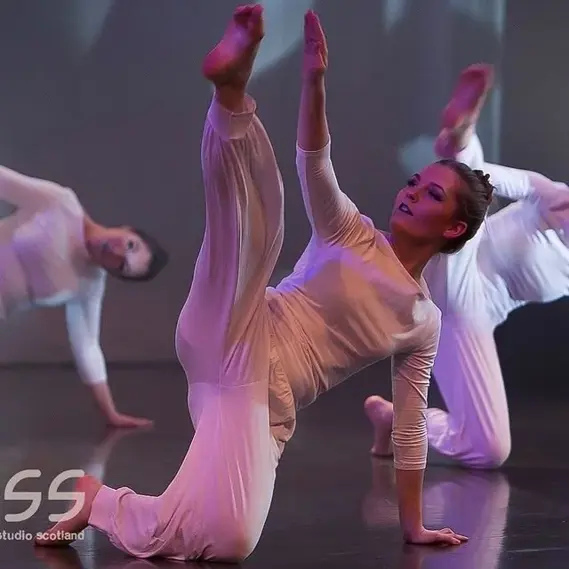
Of the many thousands of people that have walked through the doors of Edinburgh College, few can claim to have a more interesting story than that of Aimee Friel. Now a published author and primary school teacher, the 30-year-old, who studied Dance & Drama BA Hons (Dance), has enjoyed a unique journey since her graduation, including a period teaching dance classes to male prisoners, helping to break down misconceptions about the artform, and giving them a platform to express themselves.
To find out a bit more about how Aimee’s time at the College influenced her, and how she still reflects on some of the lessons she learned here today, we sat down for a chat.
Hi Aimee, thanks very much for joining us. To start off, could you give me a bit of an overview of what you’ve been up to since you graduated from the College?
“After I completed the BA Dance course, I managed to find work with several different dance companies. Teaching dance in community settings, in schools, in schools for children and adults with additional support needs, and in prison. I did that for around 6 years, before going back to do a post-grad in primary teaching. And in the middle of all that, that was when I got my book published about my experiences teaching in prison!”
It’s obviously an interesting hook, and something people probably don’t expect, teaching men dance in prison. What was the reality of it like?
“It’s maybe not somewhere you’d expect to wind up if you’re on a dance course, but for me I’ve always been really passionate about using the arts to help people. Dance can improve social skills, mental health, physical health, so I wanted to use that to help those that needed it most, people that had experienced trauma, or adverse childhood upbringings, or mental health issues.
“It just so happened that the dance company I was working for at the time was putting on classes in the prison, so to start with I went along and shadowed, watched the other teachers doing their thing, but nothing really prepares you until you go in and do it yourself. I did a teaching skills unit at Edinburgh College which was really helpful and impactful, and that alongside my previous experience meant I was in a good place to go in and give it a shot.”
What sort of impact did the classes have on the prisoners you worked with, and what was it like for you as the teacher in that environment?
“I really loved it. I can’t speak for everyone, but I think some people that have experienced trauma, or had a difficult time growing up, come from a tough background, can struggle to be present in the moment, and dance really encourages that. They were focusing on their breath, certain movements, muscle groups. There’s also the social side of it, they worked on lots of transferrable communicative skills, it might be that they’re doing a lift, or a counter-balance, and that requires you to really be communicating properly with whoever you’re dancing with.
“It was really about getting to know them as people, seeing them every week, it wasn’t just about the dance. It was letting them know it was a safe space, that we saw them as individuals, that they had talent. There were the usual biases that we had to break down, men thinking dance is effeminate etc, but then they get involved and see how much strength and coordination it requires, and how athletic it is. It also releases all sorts of helpful endorphins, but I could talk about that for ages!”
And when did you decide it was time to write down your experiences?
“It was during Covid, I’d been doing it for a few years at that point, and I was no longer an apprentice so I was sort of taking more ownership of the class. I was teaching it as usual and I just realised there were so many big personalities, so much humour, so much laughter, as well as the more heartfelt moments where someone would open up about a difficult experience, and I realised I didn’t want to forget any of it, so I started writing it down. It started as a journal purely for myself, a bit of a hobby, then I realised I had some good material there.
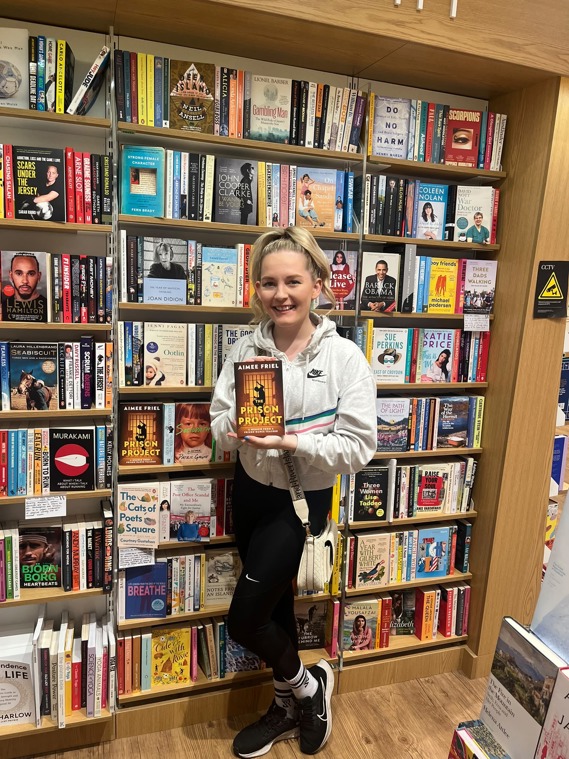
“I let my wee granny read it, and she’s a really harsh critic so she would have told me if it was rotten, but she thought it was really strong, and she encouraged me to try and get it published and gave me a lot of confidence. So, I sent it out to lots of publishers and agents, and it took a little while, but eventually it got picked up! Now you can find The Prison Project in places like Waterstones and Amazon, so it’s been pretty amazing.”
Do you still find yourself reflecting on your time at College even now?
“It’s quite funny actually, I remember when I was doing my dissertation, you could choose between a written piece, or choreography, and I chose the written piece (because I love writing!). My lecturer, Jo, she was supporting us at the time, and she really encouraged me to look into writing about the use of dance as a tool in primary schools.
“After I graduated, I wound up working with a dance company that was involved in a project which saw us collaborating with teachers to use dance to help teach kids the curriculum. We taught loads of things, maths, speech, technology, all through practical dance lessons, and I would always draw on the things Jo helped me with, and now working as a primary school teacher it all feels very full circle.”
What would you say to someone who’s considering coming to Edinburgh College to study dance?
“I’d absolutely recommend it. Having that degree opens so many doors, and will allow you to do so many things. You might want to go on and do another course, which is what I ultimately did, but having been to Edinburgh College meant I only had to do a one-year post-grad, rather than a full four-year degree. If you fancy a career change, it gives you so many options.”