

"It's a net positive for Scotland, both socially and economically"
How do you go about distilling an institution’s entire approach to a complex issue into a neat report which can be squeezed down on to 34 A4 pages, sat tidily between two covers?
That was the question facing Edinburgh College’s Director of Income Generation and Partnerships, Neale Gardiner, and ESOL and English Language Teacher Training lecturer Sarah Donno as they looked to put together a report detailing research into the College’s ESOL for Work programmes.
These programmes focus on people who want to enter the workforce, but are held back by a lack of proficiency in the English language. The pair felt that there was strong evidence the College’s programmes were making a big difference, and that it was important to back up that feeling with concrete research, and find out the exact impact it was having on the individuals involved, the companies hiring them, and the wider economic picture.
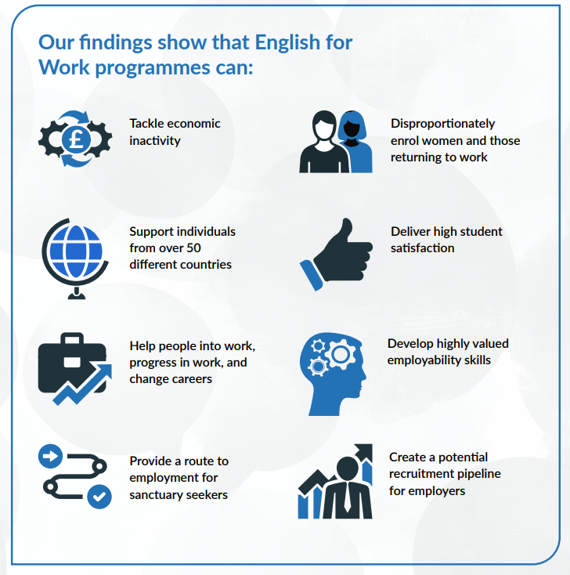
Cue many long days spent pouring over data and figures, conducting interviews and surveys, and making sure the right perspectives were included. Ultimately, the hard graft was all worth it, with Neale and Sarah producing a report, Addressing Language as a Barrier to Work and Progression, which paints a clear picture of the economic and social benefits generated by the College’s ESOL for Work programmes. These courses disproportionately enrol women and help those looking to return to work, support people from more than 50 different countries, and create a potential recruitment pipeline for employers among a plethora of other highly positive results.
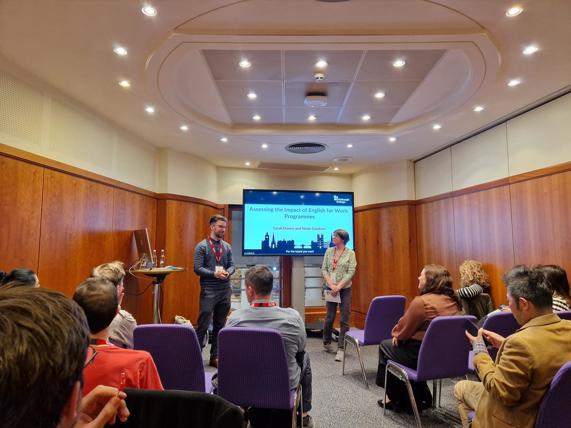
To find out exactly how the numbers were broken down and turned into a more easily digestible format, we caught up with Neale, one half of the duo responsible for the paper.
Neale says getting the methodology right was one of the first steps:
“There was an element of practicality, how do we best get the student view, while being mindful of the fact English isn’t the native language of anyone involved, so a survey made a lot of sense, and we knew that interviews would also help to provide a much richer picture.
“Some of the lecturers involved have been teaching these courses for years, and have seen the changes in demographics, with individuals now coming to the College from a much wider range of countries, so we wanted to get as much data from them as possible. It was important to speak to the employers that offer our students workplace placements too, and interviews were ideal for them to give us a fuller sense of the impact on their end too.
Although Neale had a good idea what the results might look like, there was still room for surprise in the report:
“Not being in the classroom myself, I didn’t know too much about the backgrounds of the people that utilise ESOL for Work, were they already working and looking to progress? Were they looking to get into a new industry? Were they returning after a long break?
“What really surprised me was the whole range of stories that came out in the survey, the variety of ambitions, and it helped bring home the fact that we have such a diverse cohort, all with their own goals.”

Perhaps most importantly, Neale also says the report makes it clear that helping people who want to improve their English to enter or progress in the workforce is a net positive for Scotland, both socially and economically:
“I think that when you get down to looking at the data, you have 100 survey responses, and each one represents a person that wants to work, wants to contribute, wants to progress in some way. I know it’s a bit cliché, but it shows that wherever people come from, and however they arrive at the College, they come with hopes that we can support them on a path to the future they want. I think it is really important, and the College has a real role to play in bringing together people from all walks of life. We serve our local community and region, and whoever is here and needs education we should be there for them. That’s my belief, and I think it’s shared by everyone who works at Edinburgh College.”
Addressing Language as a Barrier to Work and Progression is nominated for Research Project of the Year at the 2026 Herald Education Awards. You can read the report in full here.